More on Control Cable
페이지 정보

본문
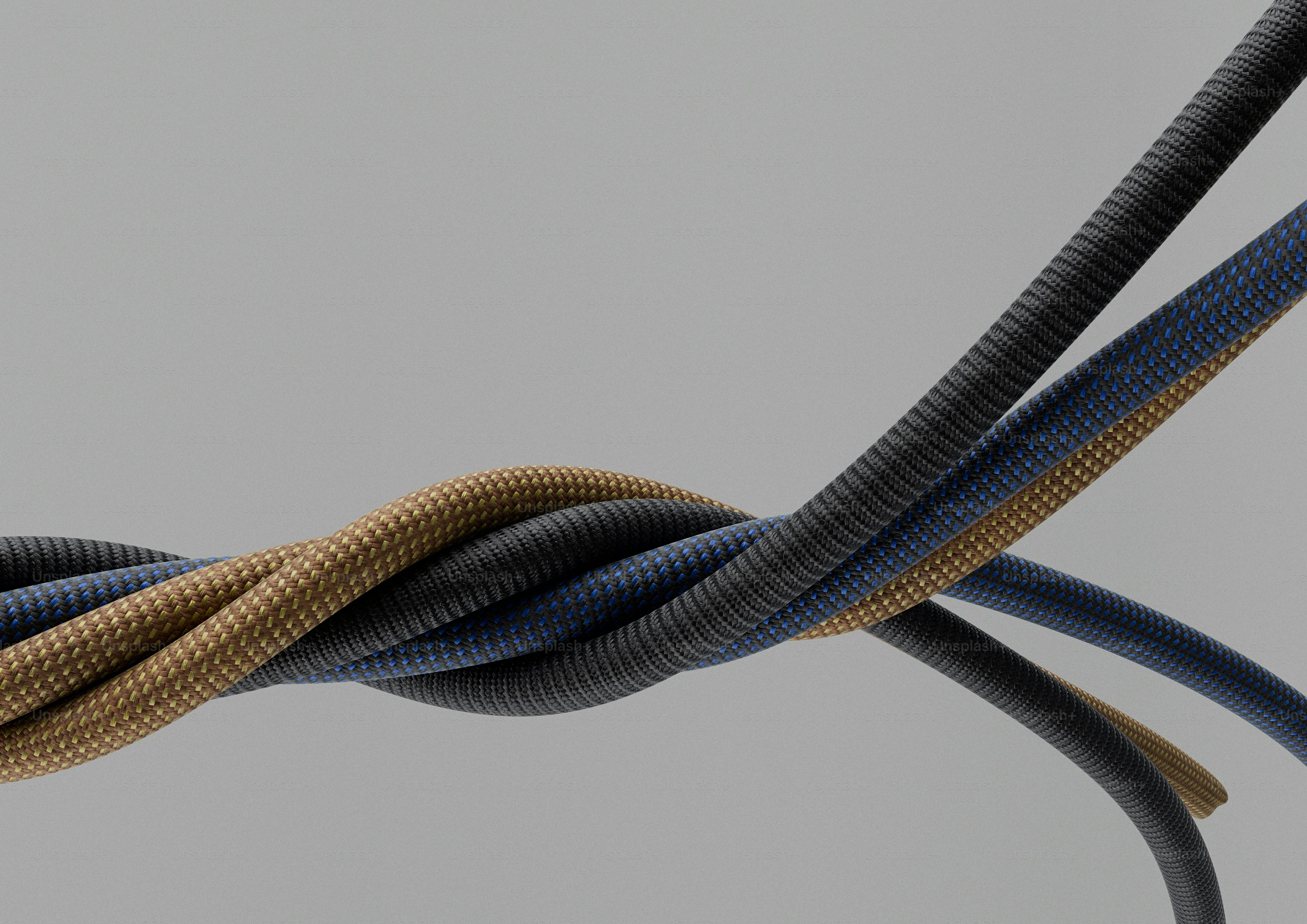
 1. Dedicated softened journey path. Conduit is the sleeve that gives the dedicated journey path for the control cable core facilitating the routing of management cables in intricate non-linear functions. If, for instance, a motor is operated with a nominal voltage of 230V, there is no cause why a control cable cannot be used as a substitute of a motor cable for the facility supply. If a motor is equipped via a normal family socket, there isn't a motive why a control cable shouldn't be used instead of a motor cable. There are several types of cables that are manufactured for very completely different functions. However, motor cables are dearer and thicker than management cables due to the more complicated core insulation. Although management and motor cables show some parallels, they are used for various functions. As well as, the use in different voltage classes and also the varying cross section present the necessity of each cable varieties in the marketplace. Since in many areas a voltage class of 300/500V is completely sufficient, the control cable is used more often. This could be the more price-effective different. Most often, management cables are solely supplied as much as a cross-part of 6mm². However, motor cables with a cross part of 50mm² and extra are not uncommon in larger methods.
 That is stronger with a motor cable than with a control cable despite the same conductor cross part. Furthermore, motor cables are only available from a conductor cross part of 0.75mm². A control cable then again is already accessible with a cross part of 0.25mm². Differences will also be found in the higher restrict of the cross part. Today we make clear the query: what's the distinction between a control cable and a motor cable? Conduits include the following subassemblies: a liner (through which the core cable runs), a wrap (offers the flexibility and safety to the cable meeting), and a jacket (act as a sealing layer towards exterior surroundings), as shown in the determine beneath. The conduits for these cables may be of the following three varieties, and their choice is dictated mainly by the appliance atmosphere. The choice of bulkhead fittings, core fittings, end fittings, and intermittent transmission fittings is based on the appliance (Push-Pull, Pull-Pull), the size of the cable, and the trail that the control cable is routed through.
Based on the consumer requirements, these fittings could be made customized to the applying. Please discuss with the Bergen cables catalog (Bulkhead Fittings, Core Fittings) for more data. Control systems, however, are sometimes way more advanced and due to this fact require more cores to transmit the assorted signals to the appropriate locations. While motor cables are usually offered with four cores (L1, L2, L3, PE) or as single core, a control cable often consists of many extra cores. The motor cable with its voltage class of 600/1000V is required if the motor pace is controlled by a frequency converter and voltage peaks happen as a result of pulse width modulation. Since in lots of areas a voltage class of 300V/500V is totally ample, both cable sorts are justified. They are sometimes not wanted. Control cables are categorized by virtue of their mechanical action, i.e. PUSH-PULL and PULL-PULL Cable. In certainly one of our last articles we took a closer look on the servo cable and the motor cable.
What's the distinction between a control cable and a motor cable? We would also be happy to advise you personally and discover the proper cable on your software. Contact us at the moment to discuss your particular software. Control cables are mechanic motion transmission cables used to relay the required signal/action from the operator to the specific control level. These multiple and diversified necessities necessitate the manufacturing of control cables from an enormous variety of materials and components and require numerous manufacturing capabilities to supply the bespoke custom-made cables suited to specific functions. To grasp the management cables manufacturing and user selection, it’s essential to look on the sub-assemblies of the Control cables. As an industry leader in manufacturing management cables, Bergen Cable has the capabilities to provide control cables suited to a various vary of purposes. Bergen Cable manufactures control cables enriched with over seventy five years of Bergen Cable’s expertise in wire rope and cables assembly. The control cable returns to its neutral/authentic place by spring actuation. The main difference between a management and a motor cable lies in the voltage class. The requirement for a motor cable is always the identical. In consequence, the core insulation achieves a higher capability, which in turn offers the cable the higher voltage class.
- 이전글정력원 ❤️1+1 반값 초특가❤️ ❤️즉시 5% 추가 할인❤️ ❤️여성 흥분제 & 여성 흥분제 사은품❤️ 26.06.06
- 다음글확인해봐야 할 [남성건강 전문몰 신뢰 기반 남성 건강 솔루션 추천 제품 바로가기] 26.06.06
댓글목록
등록된 댓글이 없습니다.