Seven Ways To Improve What Is Hypertonic Saline
페이지 정보

본문
In comparison with nebulised normal saline, nebulised hypertonic saline might reduce hospital stay by almost 10 hours for infants admitted with acute bronchiolitis; could enhance 'clinical severity scores', which are utilized by doctors to assess illness severity; and should reduce the danger of hospitalisation by 13% amongst kids handled as outpatients or in the emergency division. Treatment with nebulised hypertonic saline may additionally scale back the danger of hospitalisation by 13% amongst kids handled as outpatients or within the emergency department. We included randomised managed trials (RCTs) and quasi-RCTs utilizing nebulised hypertonic saline alone or together with bronchodilators as an energetic intervention and nebulised 0.9% saline or normal treatment as a comparator in youngsters underneath 24 months with acute bronchiolitis. Twenty-seven trials introduced safety data: 14 trials (1624 infants; 767 handled with hypertonic saline, of which 735 (96%) co-administered with bronchodilators) did not report any hostile occasions, and 13 trials (2792 infants; 1479 treated with hypertonic saline, of which 416 (28%) co-administered with bronchodilators and 1063 (72%) hypertonic saline alone) reported a minimum of one opposed occasion reminiscent of worsening cough, agitation, bronchospasm, bradycardia, desaturation, vomiting and diarrhoea, most of which were mild and resolved spontaneously (low-certainty proof).
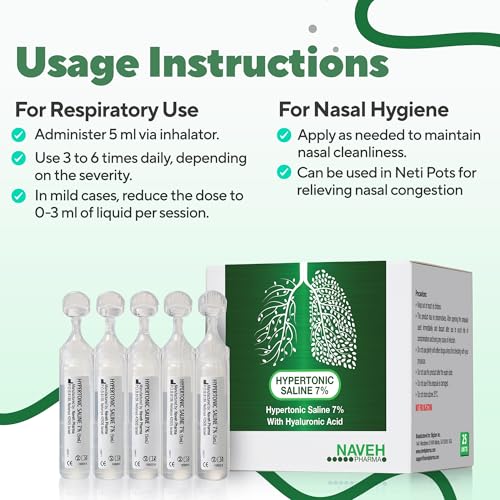 We discovered solely minor and spontaneously resolved adversarial events (reminiscent of worsening cough, agitation, bronchospasm, bradycardia, desaturation, vomiting and diarrhoea) from the usage of nebulised hypertonic saline when given with bronchodilators. We discovered only minor and spontaneously resolved hostile events (akin to worsening cough, agitation, bronchospasm, bradycardia, desaturation, vomiting and diarrhoea) from the usage of nebulised hypertonic saline when given with therapy to relax airways (bronchodilators). We looked for studies that compared nebulised hypertonic (≥ 3%) saline solution alone or combined with bronchodilators versus nebulised regular (0.9%) saline or customary treatment for infants with acute bronchiolitis. To assess the consequences of nebulised hypertonic (≥ 3%) saline solution in infants with acute bronchiolitis. Nebulised hypertonic saline answer (≥ 3%) might reduce these pathological modifications and decrease airway obstruction. Hypertonic saline (a powerful, or highly concentrated, sterile salt water answer) breathed in as a superb mist using a nebuliser may help relieve wheezing and respiratory issue. We wanted to seek out out if hypertonic saline solution by way of nebuliser is more practical and protected for the remedy of infants with acute bronchiolitis in comparison with regular saline answer.
Clinical severity scores of infants improved slightly when administered nebulised hypertonic saline in comparison with regular saline. Hospitalised infants treated with nebulised hypertonic saline may have a shorter imply size of hospital keep in comparison with those treated with nebulised normal (0.9%) saline or standard care (mean distinction (MD) −0.40 days, 95% confidence interval (CI) −0.69 to −0.11; 21 trials, 2479 infants; low-certainty proof). However, hypertonic saline could not cut back the risk of readmission to hospital as much as 28 days after discharge (RR 0.83, 95% CI 0.Fifty five to 1.25; 6 trials, 1084 infants; low-certainty proof). However, persistent fever, severe facial ache, or symptoms lasting past a typical course of viral sickness warrant medical evaluation fairly than relying solely on saline strategies. However, hypertonic saline may not cut back the danger of readmission to hospital after discharge. The first final result for inpatient trials was size of hospital stay, and the primary outcome for outpatients or emergency division (ED) trials was charge of hospitalisation. Nebulised hypertonic saline could scale back hospital stay by 9.6 hours compared to regular saline or standard treatment for infants admitted with acute bronchiolitis. The desk under summarizes typical variations to aid comparison across frequent purchasing and clinical issues.

- 이전글정품 유통 중심 남성 컨디션 관리 온라인 플랫폼 파워약국 혜택 안내 26.05.25
- 다음글The 9 Greatest No-Nicotine Vape Juice Choices In 2026 26.05.25
댓글목록
등록된 댓글이 없습니다.